Loyalty can be a positive or a negative quality. It’s always worth taking a closer look when someone claims that attribute.
Loyalty is only as good as the person, group, or cause for which the loyalty is given.
Sometimes it’s completely worthy, but it can also be toxic.
Loyalty to an abusive individual because they haven’t done anything to you or because you’re family… TOXIC. You’re complicit in the perpetuation of abuse.
Loyalty to someone who did you that big favor but is actively destructive with others… TOXIC. Plato said: Silence is consent.
You are up to the challenge. You have it in you to take the charge. Someone will receive a blessing because of you. You are making a difference just by showing up. You have just the right story for this moment. There is no one but you for this space.
Sometimes no amount of walking gives me the answer.
We will claim to have outgrown something, someone, a situation, when really what has happened is that we are not able to grow into it or unwilling to do so.
Maybe it’s just two sides of the same coin.
Maybe it doesn’t matter which one it is. Maybe what’s important is how we handle it. But what if the underlying issue is that we often dig into things but we have a habit of being onto the next brighter, bigger, shinier thing before we have completed the one we are immersed in.
I think the real problem is when we pretend we want to continue with something and we stand by while it crumbles and refuse to admit that we just aren’t into it anymore, that maybe it just isn’t working or feeding us as well as it used to. Sometimes you just have to pick up the pieces that still feel right and move them somewhere else, risking what it might look like to others, but avoiding further damage or harm.
Sometimes… no, always, being honest, not assuming that you are fooling everyone who is on the boat with you, is the best way.
But I still don’t know which side of the coin this is….
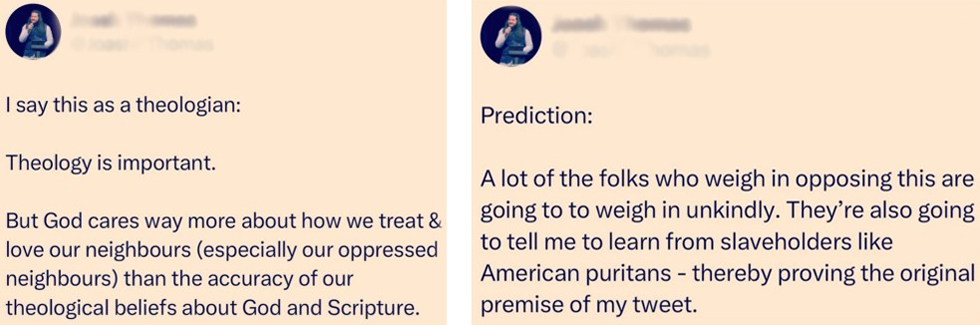
Personally, I find it difficult to activate that mantra when I am dealing with people who think it’s optional that people different from them, or those they don’t dare to understand, should be allowed to live their lives the same as the “rest of us” (OMG, that’s such a HUGE othering phrase!). I mean, what WOULD Jesus do with the folks that think it is their right to abuse, oppress, or ridicule someone else? Shouldn’t they be punished in some way? But then, I don’t believe in a God that punishes. So I find myself repeatedly examining what ISmine to do about people who stick to their guns (figuratively and literally) when it comes to their prejudices knowing that the backbone of prejudice is generally a lack of knowledge or experience.
Maybe there’s nothing for me to do… maybe there’s nothing that can be done. Maybe doing nothing and pretending this doesn’t happen is the thing to do. Right? It doesn’t affect me, so I’m just going to be positive, not talk about the hard things, and it will eventually, magically fix itself. I mean, I definitely don’t want to rock the boat or make the bigots and crazy Uncle __________ uncomfortable!
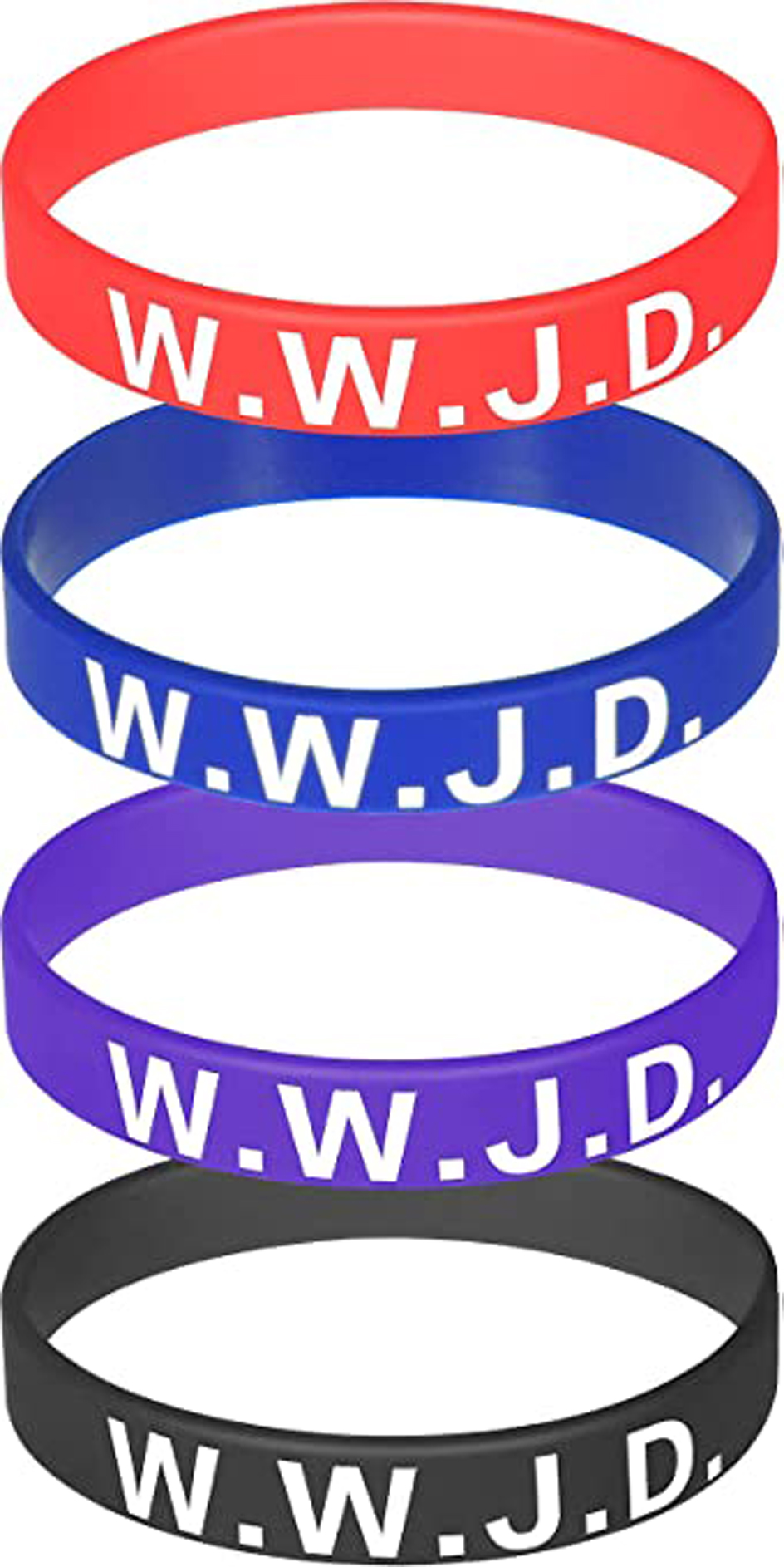
Buuuuut… WWJD?
Sidebar: In the parable of the Good Samaritan as a story-lesson told by Jesusas told by Luke who was taught by Paul in answer to the question, “Who is my neighbor,” this Good Samaritan stopped and helped a stripped and beaten Jewish guy even though back in the day these two groups hated each other. No one stopped to help him — not even another Jew! They didn’t want to get involved. But this Samaritan could have passed him by because he was “different” and they didn’t agree theologically, politically or socially speaking. And yet, he showed mercy. The Samaritan didn’t stop and ask him about his sexual orientation, or if he had a criminal past, didn’t care if he had piercings, didn’t know if he had a home or not, knew nothing of the presence of any addictions, didn’t ask if he was identified as a female at birth, had no clue if he had a side gig dressing in women’s clothing and partying like it’s 1999… he only moved on “love (the greatest commandment or law of all) thy neighbor.” WWJD? That.
It’s not hard to guess how Jesus would have treated trans folks, brown, black, or white folks (In case you missed the geography and ancestry lessons, Jesus wasn’t white.), gay and queer folks, drag queens, people without homes, immigrants (especially the brown ones, because lordy y’all are so welcoming to immigrants from European and other Caucasian-hegemonized countries — but I digress….), prisoners, addicts, etc. I don’t think he would have found them to be of such little value at all. I also don’t believe he would have felt his existence threatened in any way by any of them, nor do I believe that he would have felt that his own existence was somehow subtracted from or made less-than by their existence, AND I don’t believe he would have felt he was in any way superior to any of them. (Taking a breath….) YES, all that can exist in the same space at the same time… much like people. <side-eye>
In fact, I believe Jesus was not only a healer, a Rabbi (hopefully if you’re a follower, this is not news to you), and prophet, but a social worker and an activist as well. And dare I say it? A socialist. <gasp> But somehow so many of us hide behind fair-skinned, blue-eyed, light brown-haired Jesus when we want to protect our prejudiced, bigoted behaviors. I wonder what Jesus would have said about that. Some of us even go to churches and other places of worship that encourage that behavior which is not like what Jesus taught at all.
In my best Jesus voice (because I do have one in my head): Oh, never mind. I’m saving that for another post. You’ll have to wait a minute.
From the very beginning of Jesus, and even the beginning of the thought of Jesus, we have resisted changing our thoughts and mindset while claiming to be a follower, a student, a worshipper. We have continually tried so hard to make Jesus wrong without saying that he was wrong out loud. We have manipulated scriptures since even before Jesus; we seek out places of worship and groups that identify and align with our behaviors that are based outside of love, and then turn around and call ourselves “saved,” as if that elevates us somehow. Declaring it doesn’t make it so, but daily behavior and thinking does — or doesn’t. Choices, right?
I mostly think we just need to be saved from ourselves. It’s not like we don’t have the instructions. We have them, but we’re satisfied letting someone else tell us what they say. And I still don’t know what is mine to do about people who can’t figure out how hypocritical they are as Christians who think they can justify limiting someone else’s existence. WWJD? I’m honestly not sure, but I’ll keep asking.
The post that got the thinkie thing going this morning.
I don’t know to whom credit for this belongs, but I totally agree.
Jesus wasn’t sent here to make you comfortable and complacent. You can get your ears tickled at home. Go to church to stretch your mind and heart. If you’re in a church where your pastor won’t speak on the harsh things about humanity (or inhumanity) as well as the ones that make you feel good, tell me, who is up in there actually following Jesus then? Jesus called out ALL the nonsense! Put your grown person pants on and stop listening to the Church of Mainstream Media and Politicians who politicize pain. We’re here to expose and learn from the pain, not run from it.
I have been watching this Gerbera Daisy grow for at least a couple of weeks now. I first noticed it opening up on December 26th, and today is January 16th. This probably doesn’t seem unusual, except that we are in the dead of winter. All of my Gerberas die out in the winter and most of them come back in the spring if I have some kind of cover for them, or they are covered somewhat and protected by another plant nearby. This year, I didn’t cover it at all. I just ran out of time, and then figured whatever survived this winter in the garden was icing on the cake of life!
For context, so far this particular flower has survived freezing temperatures, hail, winds above gale force, and the most ridiculous deluge of downpours for days on end. It also normally blooms a red-orange, but is showing up yellow at this time.
For context about myself, I love gardening. It is one of my very most favorite things to do. When I am in the dirt so to speak, I have some of the most profound personal discoveries and gain insight for solving all of the world’s ills. I am at home in the garden and yard, and it is a balm for my soul and mind. It turns my often-chaotic thoughts into a peace garden. It transforms my rushing river of emotions and stinky thinking into a constructive and placid pond in a meadow. I gain so much calm and peace and clarity in the fog and storms of life when I spend time in nature. So, I’ve been learning from this beauty.
This surprise Gerbera Daisy – unexpected, but welcome.
We usually think of daisies as being delicate. But this one is showing us something different. This one is showing us that there is strength in what appears to be delicate, and apparently longevity as well! Below are 35 of the many thoughts that have come up as I have observed this flower for the last few weeks.
I can weather any storm.
I may have some tatters, and scars, and maybe even some broken or missing pieces, but I am still beautiful.
It is somebody else’s choice whether they see me as perfect petals or tattered and torn, but means nothing about how I choose to show up.
At first glance, I might appear to have it all together, to have it all perfected, but upon closer examination you will see truly that I have lived through a lot. And yet, I live.
Sometimes I get stuck in conditions that are tough, but I can show up beautifully still.
If a flower can change its color to survive a season that no one would expect it to survive, I also can shift how I show up to thrive where I am in the moment, the season.
What is my default behavior, my unconscious automatic reaction? Do I notice the beauty or the scars first, and which do I focus on?
Do I honor someone’s scars, especially if I don’t understand them or why they have them?
Sometimes it is necessary to find a balance to stay true to what is good for me and still thrive where I am.
Hold on! There is a new season just around the corner.
Someone might pick me, but it may not be right now.
If no one picks me right now, I can still bloom and bloom again.
If someone does not pick me, they aren’t the one who sees my strength and beauty correctly.
No two flowers are exactly the same, and the flowers don’t care.
Every good bouquet or garden has other kinds of flowers and greenery to create texture, levels, and a more beautiful mix.
I may not be someone’s favorite flower, and I may grow better in a different garden.
There is a time to bloom, and there is a time to rest.
Beauty can be fleeting, so plant good seeds.
It may be surprising at how well I can do when circumstances and surroundings don’t appear optimal.
Surprises and blessings aren’t always planned.
Despite how, where, or what climate I was raised in, I can still thrive, be beautiful, and share joy.
I may never know the depths of what came before someone’s growth and success, or the circumstances from where they are coming.
How someone is dressed or appears shouldn’t determine how much respect I give them.
Examine others under a microscope only if you can handle them lovingly.
I am worthy regardless of where I show up, who is around, or what enyone else thinks.
I won’t be everyone’s favorite.
Sometimes I will need to or have to grow alone, and may even do better that way.
Sometimes I might have to stand alone.
If you pick off too many of my petals, you might end up with an answer you don’t like.
Give me enough room to spread out.
Protect me, but let me grow.
I’m not done unfolding.
I am a part of nature.
Handle me with care — and this is as much a message for me as it is for you.
I have layers, and none are the same, but they all make a whole, beautiful me.
What would you add to this list?
A closer examination reveals that it’s tattered, weathered, but still thriving and beautiful.
I was thinking about someone dear that passed away recently. I found myself gravitating to his Facebook page, and there were many comments about how we have “lost” him. Later, I was looking at gifts for someone, and a particular item could be given as a gift of remembrance of someone special who had passed away. The reviews were typically, “When we lost our brother…,” and “When I lost my husband…,” or “My neighbor lost her dog last week…,” which really could have been confusing in another context about what really happened.
Saying “I lost ___________,” when referring to someone who died always seemed peculiar to me, though I totally get how it’s more comfortable than saying “died” or “dead.” It just seems less final than the latter. Even when we are afraid someone might perish in the future, we sometimes say, “If I lose you…,” or “The thought of losing you….” “Lost” feels less permanent, a little less real, and lands a bit softer, too.
For me “lost” always sounded in my brain like, “I disappeared my grandmother,” like an action item carried out by me, vs. descriptive about the person who is now gone and where they might have last been seen or been placed. It’s a hard one for me to say because that’s what I hear when I say it, and I know I didn’t actually misplace someone, or have anything to do with where they went. But of course I use the phrase out of respect for others’ ears and hearts.
Personally, I take little solace in someone going to Heaven and still being labeled as “lost.” If there is really a literal place that is Heaven, then they most certainly are not lost, and are definitely, literally in a better place. And if there is no literal Heaven, they’re just gone, not lost. Hopefully they are not wandering around looking for a gas station where they can ask for directions or trying to get better service to view an online map. I picture a man walking in circles, refusing to ask for directions, and ending up back on Earth in another dimension. (Welcome to my brain.)
I have to agree that when someone we love dies, it sure does feel like a loss, a void, having something ripped away without our consent. I think if I were to say it exactly how it feels for me, it would be more like, “I feel lost without ___________.” The loss is definitely more on my end rather than the person or pet who died having gone somewhere where we now can’t find them, or forgot where we last left them.
When someone dies and I say that I lost them, it sounds like there is hope that I will find them again, recover the relationship somehow at some point. Some philosophies say that I might, but even with that I am not guaranteed. What this all means to me, really-really, is that I am in fact the one who feels lost. I am the one who is now wandering through the valley of grief and uncertainty, juggling life between the facts, the must-do’s of day to day life, and calling it whatever it needs to be called in order to tolerate it and accept the void of a missing piece never to be returned to where I think it belongs, to where I want them the most.
I often wonder if we truly came to realize how much our apathy, our overt and covert racism, homophobia, genderism (or pick an ism/phobia) hurts us on a personal level — would we finally do something about it? If we found out it was making us sick, if we felt it in our own lives, on our own bodies, in our own homes, in our own minds, would we finally be compelled to do something? Or would we still just be stuck on “right” to save face and suffer silently, or blame it on “them?” I think we put a lot of energy into saving face, and a lot of running from the truth… or even mangling it, covering it up. We think, “I’m not the one; surely it’s not me,” and even get mad when confronted.
We put a LOT of energy into this, and yet we think we remain unaffected by the covering up, the pretending, the avoidance to look at ourselves squarely and honestly. We put on a mask when we go about our daily business outside of the home, but when we return the mask is put away and we discuss all about “those people,” and we have strong opinions on people we can’t even see honestly. We pretend (or do we really believe this) that if we don’t talk about it, refuse to give it attention, that we somehow are not contributing to the racism, the homophobia, Islamic hatred, etc. We tell ourselves and others that we just won’t participate in the discussions because that would be contributing to the problem. But…
WHEN HAS IGNORING SOMETHING EVER MADE IT BETTER?
If you let it, this might set you free from the invisible box you have created for yourself and probably the children you might be influencing…. Do you know that you don’t even have to understand how or why people are who they are tojust let them live, and even to love them? And here’s the REAL personal freedom…. Once you are able to embrace that, it’s no effort to embrace them just as they are. That’s where love lives, and that’s what it looks like.
We like to say that we love all people, don’t we? It sounds right, and feels good to say — even seems logical. For added theatrics or emphasis, we even wave our hand when we say it as if we’re brushing off how ridiculous it is to even have to say it out loud.
You have a good relationship with your Black neighbor, and your kids even play together.
But do you love Black PEOPLE?
That Muslim woman in the next cubicle is hilarious, and you frequently lunch together.
But do you love Muslim PEOPLE?
The Mexican woman who babysits your children during the past four summers is a wonderful addition to your lives and with whom you entrust your children. She even teaches them Spanish!
But do you love Mexican PEOPLE?
You’re nice to Emily, the transgender checker at the grocery store that you look forward to seeing every week.
But do you love transgender PEOPLE?
Your love your cousin who is gay and you get along great with him and his husband.
But do you love gay PEOPLE?
I’m sure you’re onto me by now, and may have already begun making excuses before you reached the end of the list or stopped reading the list altogether. Hopefully none of that’s true and you get the point. But if it is true, I hope you ask yourself why that is, and I hope you go even further and begin really thinking about this. One thing that can happen is that you will start showing up as the person you’ve been saying you are. You remember — the one that loves all people!
I get it. (I don’t, actually, but I do know something about this personally.) You’re secretly afraid of what other people in your circles might think. You don’t want to admit it, but it’s true. You’re afraid of what you will lose, and this is a driving force for so many of us that causes us sometimes to double down on the excuses, and why so many of us turn to apathy, ignoring, or defending all the “good people on both sides.” We are more afraid of how we might look, what we might lose, or even who we might have to talk to in a new way.
Freedom. That’s what you get. You get freedom from the excuses, freedom from toxic ideas and people. You get new vision, and you get to do the work of self-repair, self-reflection, and self-love instead of the arduous work of covering up, the laziness of apathy and tolerating, and the sweat-work of defending terrible people, systems and ideations. You get freedom from the pain of giving and being an assist to systems that hurt other people. You will lose some; you will. And then you will be free from people who won’t operate on a higher level of humanity.
Operating from this is also work, but it isn’t the kind that hurts us on a soul level or the level of hurting humanity. In fact, it’s actually restorative on a cellular level. And the best part of all… you will be on your way to telling the truth when you say, “I LOVE ALL PEOPLE.”
I know. What does MLK have to do with relationship? Pardon me while I meander today….
Today is MLK Day. People are off work. Some of us are out in community today. Some of us are out in community much of the time, while others come out this one day every year. Some of us are doing whatever it is we are doing and just glad to have a day off from work. Some of us only get into action when there is a chance to quote Dr. King in some way that serves our interests, but not necessarily the interests for which the quote was originally penned.
Anyway, this is what is on my mind today, and as usual, my thoughts meandered beyond that one point. I am usually out in community on this holiday, and many times during the year, but here I am at home recovering from COVID-19. So, I got to thinking about Dr. King, how this radical civil rights leader has been smoothed down over time — made to look more “acceptable” to the masses vs. who he really was and why he fought so hard and for which he gave his life over. I got to thinking about how some of us are in agreement with what he stood for, his actions, his thoughts. I got to thinking how that is very typical, actually, for a lot of different kinds of relationships, i.e., romantic relationships, friends, business, supervisor/subordinate, parent/children, etc.
Consciously or unconsciously we go through life creating and even undoing. Sometimes it’s on or with a purpose. We set out to create, change, or undo something. Other times we are just on autopilot or may not even be paying attention, yet we are still creating, changing, or undoing by our actions and/or participation. Some of these have ripples that carry out so far we may not even realize the motion is still in action, and long-forgotten by us. A lot of the time we don’t want to add our name to the co-creator’s list because the situation isn’t really a good one, and while we wish it were otherwise, we are a part of it still.
I believe that most of the time we are co-creating. We are in agreement by our participation, and even by inaction to reverse or change a course set upon. We participate consciously or unconsciously. As I said above, this is no different for a lot of different kinds of relationships. Supposedly there is a reaction for every action taken under the sun, which makes me wonder how much of those are done consciously or unconsciously.
I tried but couldn’t find this quote or story that someone once read to me, but it was something like this: In a romantic relationship where both people are assholes, they stay together because they each are in agreement to stay together so they can continue to be assholes. In other words, one of them started out as an asshole, and the response by the other (whether on purpose or not) was to also turn into an asshole. Therefore, they didn’t have to face the situation and the faults, it just gave each permission to continue on without recourse (or so they think). It was never talked about. (Or it could have been, but to no avail.) They just continued on being assholes, and one couldn’t call the other out for they would then be called out for their asshole behavior. One’s poor behavior was more important to them than talking about it, apologizing for it, and for sure more important than changing it. Whether it was verbalized or not, a written plan or not, or even if one or both were cognizant of it or not, what they got was something they co-created. They were in agreement, and the agreement was signed off by their actions (or inaction).
What could have been created had one of them changed course? ‘Doesn’t matter what change — any change. You can always interrupt the ripple effect by just causing a change in the ripples.
What about the mother that can’t accept that her son is gay? Now the son doesn’t come around because he doesn’t want to be ostracized or feel uncomfortable. It may be understandable why the son doesn’t come around, and maybe even necessary. Something is still co-created here. Co-creation isn’t just negative. Sometimes it’s positive, sometimes flat out necessary, but it’s still a co-creation. The parent in this staging set an energy in motion and the other responded.
Dr. King set out to co-create a movement, one that is still creating, moving and evolving to this day. Some of us are in agreement with what his intentions were, while some of us speak about it but never take on the lessons for ourselves, as if it’s meant for someone else out there somewhere. That’s still creating something (or possibly undoing), and others will fall into that and now an atmosphere of moderation or apathy is being co-created. There is an agreement — a co-creation.
Friends are friends because they are in agreement in enough ways that they can remain friends. The extent of your friendship with someone is the extent to which you are in agreement. This is universal, and it also applies to more than friendships. Again, this is seen in romantic partnerships, business, church, government, schools, etc.
Our agreements are about creating something together (good or bad), or undoing someting together. True enough that there are times when we don’t have a say in the matter, but then those aren’t the ones we are in agreement with.
How do you suppose this inter-relatedness, this agreement, is found in politics? In business? In friendships?
Whenever there is mutual participation (and even inaction is a type of participation, a type of agreement), something is created. Have it be something that’s good for you. Have it be something that is good for us.
Thanks for strolling through a maze that is my mind today.